

Sydney, with its iconic harbour and vibrant culture, has the potential to be a cyclist’s paradise. Yet, the reality falls short. Transforming Sydney into a bike-friendly city requires a coordinated effort to address infrastructure gaps, safety concerns, and societal perceptions. Inspired by the social enterprise Revolve Recycling and the actionable insights from the Active Transportation Playbook, I explore what’s holding Sydney back and, more importantly, what can be done to unlock its potential.
Infrastructure and Safety: Building a Cycling Network
Sydney’s current cycling infrastructure is fragmented and underfunded. With only 0.2% of the transport budget allocated to active transport, it could take over 300 years to create equitable and safe streets (City of Sydney, 2023; Climate Council, 2021). To fast-track progress, Sydney needs bold investment and visionary planning. To their credit NSW as part of their Future Transport strategy has created the NSW Active Transport Strategy which suggests the appetite is there.
Key Strategies for a Safe Network
The Sydney Strategic Cycleway Corridors Plan presents an opportunity to integrate the playbook’s low-stress cycling route principles, creating safer and more appealing routes for commuters and recreational cyclists alike.


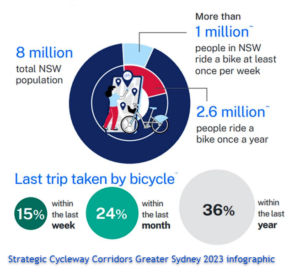
- Safe Routes to Schools map routes with minimal traffic and physical barriers to reduce risk for cyclists. For example, connecting Marrickville to the CBD with dedicated bike paths could make commuting safer and more appealing. Expanding programs like the Bourke Street Public School initiative citywide, creating bike-friendly routes and education campaigns could help to boost confidence among young riders and their families.
- Complete Streets Design: Redesign neighbourhood streets in areas like Redfern and Newtown to prioritise pedestrians and cyclists. Incorporate raised crossings, widened footpaths, and protected lanes to create inclusive spaces.
- The GreenWay shared path, linking Dulwich Hill and Lilyfield, serves as a strong local example. Expansion of shared bike paths in key areas, such as the Eastern Suburbs to the CBD, could further improve connectivity and accessibility, encouraging more people to choose cycling as a viable transport option (Inner West Council, 2023).
Changing Perceptions: Education and Community Engagement
Building safe infrastructure is only part of the solution. Changing how people perceive cycling—making it feel safe, sustainable, and enjoyable—is equally crucial. To create a truly inclusive cycling culture, initiatives must address practical barriers, provide accessible resources, and demonstrate the social and environmental benefits of active transport.
Strategies for Cultural Shift
- Educational Programs: Initiatives like the AusBike program, backed by AusCycling, teach road safety and cycling skills to new and young riders, building confidence and awareness (AusCycling, 2023). Similarly, programs like Bike League’s Benchmarking Report offer stakeholders insights and templates for advocating active transportation. Bike Fort collins is another US example of an advocacy program and they curate an active list of videos of school routes shot from the students point of view.
- Equitable Access Through Local Initiatives: Programs such as the UNSW Bike-ology service provide free bike repairs twice a week for students and staff, directly addressing barriers to bike maintenance and fostering a sense of community. By offering these services at no cost, Bike-ology exemplifies how universities and local organisations can promote equitable access to cycling, particularly for individuals who might not otherwise afford bike upkeep. This grassroots approach helps build confidence and normalises cycling as a sustainable transport option.

Bike-ology UNSW Free Bike Repairs
- Learning from Global Examples: Copenhagen has pioneered equity in its cycling strategies through initiatives like subsidised bike schemes for low-income residents and outreach programs for marginalised communities. By prioritising accessibility, the city ensures that everyone—regardless of background—can participate in and benefit from its cycling infrastructure. Sydney could adopt similar measures, focusing on underserved communities to create a cycling network that leaves no one behind.
- Addressing Practical Concerns: Overcoming perceived barriers—such as helmet requirements, attire concerns, and hair management—can encourage broader participation, particularly among women. Partnering with organisations like Revolver Recycling can provide access to affordable bikes and support programs for marginalised groups.
- Highlighting Benefits: Public campaigns that showcase the financial, health, and environmental benefits of cycling can inspire behaviour change. Examples include community rides, sustainability workshops, and social media campaigns that celebrate cycling achievements and its contribution to a greener city.
From a Centre for Social Impact perspective, fostering inclusivity in these efforts is paramount. By ensuring that active transport initiatives prioritise access for low-income and marginalised communities, Sydney can demonstrate its commitment to equity. Programs like Bike-ology and lessons from cities like Copenhagen serve as templates for embedding these values into transport strategies, aligning sustainability with social impact.
Advocacy groups like Bicycle NSW and Revolver Recycling play a critical role in this transformation, driving cultural change and ensuring cycling becomes an integral part of Sydney’s identity.
E-Bikes: A Gateway for Broader Adoption
E-bikes present a unique opportunity to overcome Sydney’s hills and long commutes, making cycling accessible to a wider range of people. However, Australian transport policies haven’t fully embraced their potential (Griffith University, 2022).
Accelerating E-Bike Adoption
- Subsidised Sharing Schemes: Scale up programs like Lime Bikes or introduce council-backed subsidies to make e-bikes affordable for families and students. Brisbane’s recent e-bike subsidy program demonstrates how targeted financial support can significantly increase e-bike adoption, making them a viable option for more people. Sydney could adopt a similar approach to encourage a wider demographic to switch to e-bikes.
- Charging and Parking Infrastructure: Install charging stations and secure parking at major hubs like Central Station and Circular Quay, integrating e-bikes with Sydney’s public transport network.
By embracing e-bikes, Sydney can encourage hesitant commuters and expand active transportation options, reducing traffic congestion and carbon emissions while improving accessibility for all.
Urban Design for People, Not Cars
To create a truly bike-friendly city, Sydney must shift its urban planning priorities from cars to people. This requires rethinking how we design streets, public spaces, and transport networks.
Key Urban Planning Initiatives
- Expand Car-Free Zones: Pedestrianise areas like George Street in the CBD, creating bike-friendly corridors that connect neighbourhoods and reduce congestion.
- Adopt Vision Zero Policies: Commit to eliminating traffic fatalities with safety-first urban designs. High-traffic areas like Parramatta Road could benefit from speed reductions, protected intersections, and dedicated cycling lanes.
This approach aligns with global best practices, including resources like the Healthy Neighbourhood Navigator, which helps cities measure and improve walkability, cycling access, and green space integration.
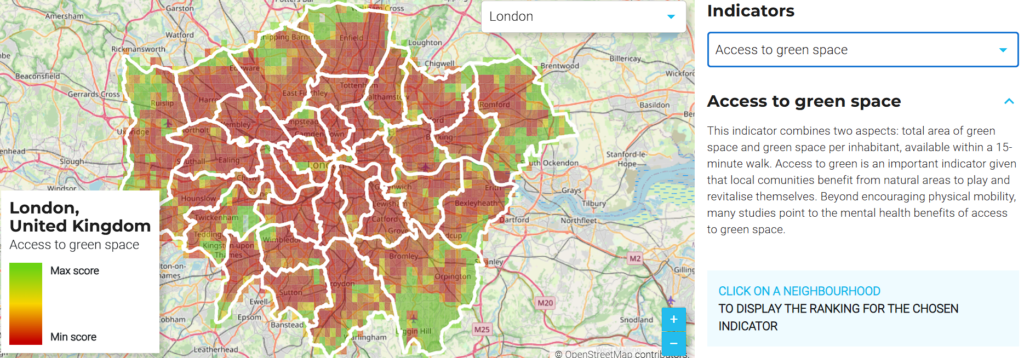 Healthy Neighbourhood Navigator – London
Lessons from London
London offers a compelling model, scoring high in green space accessibility and traffic safety, creating a safer environment for walking and cycling. The city has implemented:
- London’s commitment to clean and safe transportation is evident in its Low Traffic Neighbourhoods and the world’s largest Clean Air Zone, which limit polluting vehicles and reclaim streets for pedestrians and cyclists.
- A dedicated plan in the London Borough of Waltham Forest, enhancing local access to shops, cultural hubs, and green spaces, fostering healthier and more connected communities.
These initiatives demonstrate the transformative power of prioritising active transportation. For instance, research suggests that a 30% increase in local retail services citywide could extend Londoners’ collective lifespan by 3,500 years, prevent 120 premature deaths, and significantly reduce carbon emissions—35% of which currently come from car journeys.
How Sydney Can Learn from London
Sydney can adopt similar strategies by:
- Introducing Low Traffic Neighbourhoods in suburban areas like Marrickville or Leichhardt to prioritise local walking and cycling.
- Expanding green spaces and improving their connectivity with bike-friendly routes, inspired by Waltham Forest’s approach.
- Exploring city-wide measures like Clean Air Zones to combat pollution and encourage more sustainable modes of transport.
By leveraging tools like the Healthy Neighbourhood Navigator and learning from London’s successes, Sydney can reimagine its urban spaces to prioritise health, sustainability, and active transport, creating a model city for future generations. This approach aligns with global best practices, including the Active Transportation Playbook, which emphasises holistic urban design that integrates cycling into everyday life (US Department of Transportation, n.d.). The playbook provides mapping tools and stakeholder engagement strategies that can guide Sydney in designing connected cycling networks.
Inspiration from Houston: A Case Study in Active Transportation
The Active Transportation Playbook highlights Houston, Texas, as an exemplary case of transforming a car-centric city into a more bike-friendly environment. This is particularly relevant to Sydney, which shares similar challenges of urban sprawl, heavy reliance on private vehicles, and fragmented cycling infrastructure.
Lessons from Houston for Sydney
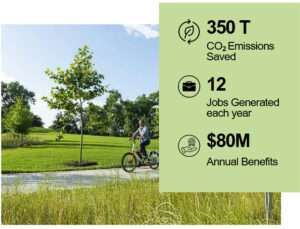
- Visionary Leadership: Houston’s Bike Plan focused on creating a comprehensive cycling network that integrates seamlessly with public transport. Sydney can take inspiration by aligning its cycling initiatives with public transport hubs, such as Central Station and Parramatta.
- Investment in Connectivity: Houston invested in linking underserved neighbourhoods to employment centres through strategic cycling routes. Similarly, Sydney could prioritise connections between areas like the Inner West and the CBD to ensure equitable access.
- Community-Centric Design: Houston’s engagement with local stakeholders, including cyclists, advocacy groups, and businesses, ensured the plan reflected community needs. This participatory approach could help Sydney build trust and support for new cycling projects.
Houston’s community-centric design demonstrates how engaging local stakeholders early can create lasting support and trust—something Sydney councils could emulate by involving schools, workplaces, and advocacy groups in planning. By focusing on connectivity and stakeholder engagement, Houston saw a significant increase in commuter cycling within five years—a goal Sydney can aspire to.
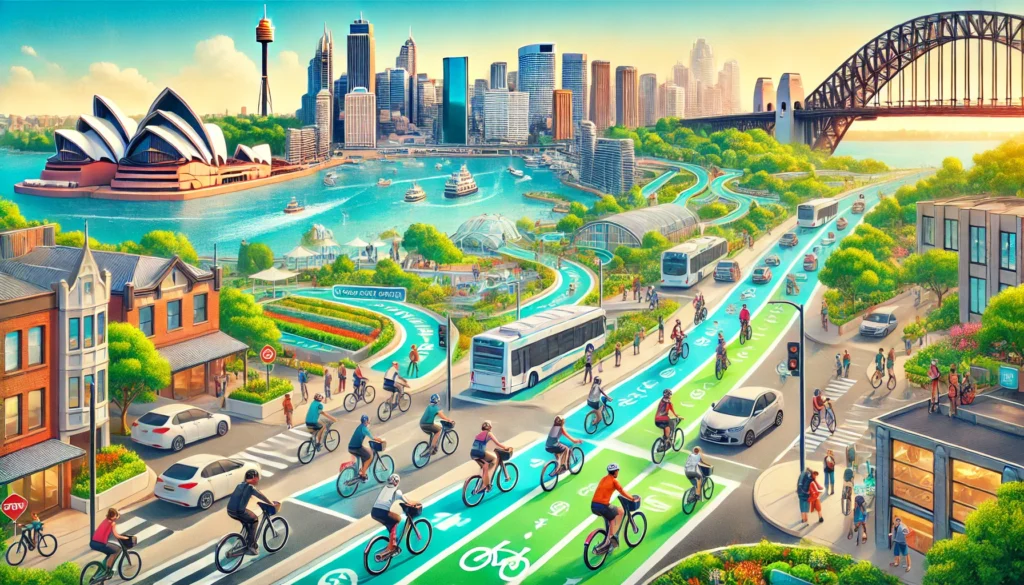
A Cycling Future for Sydney
Transforming Sydney into a cycling city demands more than just bold visions—it requires collective action. Policymakers must prioritise active transport, businesses should champion cycling-friendly workplaces, and residents need to advocate for safer streets. The Active Transportation Playbook shows us the way, offering practical tools like low-stress cycling networks, car-free zones, and e-bike strategies. By embracing these approaches and adapting them to Sydney’s unique context, we can create a healthier, greener, and more liveable city for all. Integrating equitable outcomes is a key value within the Centre for Social Impact. To ensure socially impactful initiatives deliver equitable outcomes, we must ensure everyone—regardless of background or income—benefits from active transportation systems. Integrating equitable outcomes ensures both environmental and social sustainability, setting a global example for inclusive urban design. Let’s take inspiration from cities like Houston, where visionary leadership and community collaboration have proven that change is possible. Together, we can move Sydney forward—on two wheels. It’s time to act boldly, collaborate widely, and prioritise cycling to create a thriving, bike-friendly Sydney.
Get on your bike, Sydney—because the future is waiting!
References
- AusCycling. (2023). AusBike program. Retrieved from https://auscycling.org.au
- Bicycle NSW. (2023). Safer cycling study: Summary report. Retrieved from https://bicyclensw.org.au
- Bike Fort Collins. (n.d.). School route videos and active transportation resources. Retrieved from https://bikefortcollins.org/
- Bike League. (2022). Benchmarking Active Transportation Report. Retrieved from https://bikeleague.org/benchmarking
- City of Sydney. (2023). Active transport strategy. Retrieved from https://cityofsydney.nsw.gov.au
- Climate Council. (2021). Shifting gears: Path to zero transport emissions. Retrieved from https://climatecouncil.org.au
- Copenhagenize. (n.d.). Copenhagen Bicycle Account: Equity and cycling. Retrieved from https://copenhagenize.eu/
- Department of Transport and Main Roads Queensland. (2022). Queensland cycling strategy 2022-2027. Retrieved from https://www.tmr.qld.gov.au
- Greater Sydney Commission. (2018). A great place to ride: Cycling strategy for Greater Sydney. Retrieved from https://gsc.nsw.gov.au
- Griffith University. (2022). The electric bicycle surge: Transport revolution or hype? Retrieved from https://griffith.edu.au
- Healthy Neighbourhood Navigator. Retrieved from http://healthyneighbourhood.c40.org/
- Inner West Council. (2023). GreenWay shared path. Retrieved from https://innerwest.nsw.gov.au
- London Borough of Waltham Forest. (2023). Healthy Streets program. Retrieved from https://www.c40knowledgehub.org/s/article/Healthy-neighbourhood-explorer?language=en_US
- NSW Active Transport Strategy (n.d.) https://www.future.transport.nsw.gov.au/sites/default/files/2022-12/Active_transport_strategy_0.pdf
- Revolve Recycling. (n.d.). About us. Retrieved from https://revolverrecycling.com.au/about
- Transport for NSW. (2021). Future transport strategy 2056. Retrieved from https://transport.nsw.gov.au
- US Department of Transportation. (n.d.). Climate strategies that work: A playbook for state DOTs. Retrieved from https://climate-strategies-that-work-usdot.hub.arcgis.com
- US Department of Transportation. (n.d.). Active transportation. Retrieved from https://dot-climate-strategies.my.canva.site/active-transportation-website