

China’s economic rise has transformed global trade, technology, and education. Yet, as debates emerge about its future, it is clear we are entering a period of transformation—one that presents both challenges and opportunities. For Australia, China’s economic shifts have profound implications, particularly in trade and higher education—two sectors that form a critical part of our economy. Understanding these shifts is crucial to maintaining a balanced and adaptive approach.
Diverging Perspectives on China’s Economic Trajectory
Professor Michael Beckley of Tufts University presents a stark assessment of China’s economic outlook, identifying four key issues driving its slowdown.
- Resource Depletion: China’s rapid industrial growth has strained vital resources such as water, energy, and arable land, raising the cost of economic expansion.
- Demographic Decline: The legacy of the one-child policy has created a rapidly aging population and a shrinking workforce, challenging social welfare systems and productivity.
- Political Centralisation: Xi Jinping’s centralised governance model has stifled innovation and economic efficiency.
- Geopolitical Pushback: Aggressive foreign policies have prompted resistance from Western nations, reducing access to markets and cutting-edge technologies.
These factors are likely to disrupt key Australian industries, including higher education, where Chinese enrolments are a major revenue source. Aligning with the University Accord’s recommendations could help Australian institutions remain competitive in this shifting landscape
However, an alternative perspective is offered by Dr Keyu Jin, a prominent economist and author of The New China Playbook. 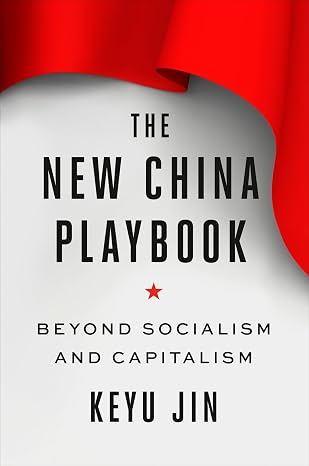 In her book and this video,
Jin argues that China’s challenges could serve as catalysts for adaptation.
She highlights how China’s middle class, technological innovation, and global trade networks position the country to navigate these obstacles and continue shaping the global order.
While her views are optimistic, they reflect a vested interest in fostering confidence in China’s economic strategy, an important consideration when evaluating her claims. See this helpful review of the book from the Guardian.
Youth Unemployment: Challenges for China, Implications for Australia
Amidst macroeconomic shifts, youth unemployment has emerged as one of China’s most pressing challenges, with recent data painting a concerning picture.
- The 16 to 24 age group, representing over 60% of China’s urban population (nearly 62 million people), is grappling with jobless rate for the 16-24 age group could estimated at 25% under broader methodologies.
- In 2024, 11.79 million university graduates are entering a labour market already stressed by declining population growth and urbanisation.
- The Third Child Policy of 2021 aims to address this, but urbanisation and a record-high youth jobless rate of 21.3% in June 2023 complicate the issue (Attané, 2022; Loo, 2023).
As I noted in my earlier post on Neijuan, the hypercompetitive environment in China is driving many young people to pursue additional degrees not out of ambition, but as a way to delay entering a job market with limited opportunities. This phenomenon reflects broader socio-economic risks for China’s youth and highlights the ongoing pressures facing Chinese families.
These employment challenges highlight deeper structural issues in China’s economy, which directly influence the decisions of students seeking international education—an area critical to Australia’s universities. The University Accord, a forward-looking strategy for Australian higher education, emphasises diversification of student markets and sustainable funding models, making it a vital roadmap in this shifting global landscape.
Adapting Australian Universities to China’s Shifting Dynamics
For Australian universities, these challenges present both risks and opportunities. On the one hand, economic slowdown and rising unemployment could reduce the ability of Chinese families to afford overseas education. On the other hand, frustrations with limited domestic opportunities may still drive demand for international study, particularly for programs that emphasise employability and global career pathways.
Australia’s education sector relies heavily on international students, with Chinese enrolments playing a pivotal role. As noted in the Australian Universities Accord Final Report (2023) (pp8, 18), diversification and alignment with national priorities are crucial for resilience Adapting to these dynamics requires a nuanced approach:
- Program Innovation: Australian institutions must focus on programs that align with global trends in technology and sustainability, ensuring graduates remain competitive in a changing economy. As highlighted in the Australian Universities Accord Final Report (2023) (p21-23), program innovation is essential for aligning Australian education with global trends.
- Cultural Engagement: Building strong, culturally sensitive connections with Chinese families, educators, and policymakers is key to maintaining trust and relevance.
- Diversification: While maintaining ties with China, diversifying international student bases to include emerging markets in Southeast Asia, South Asia, and beyond can provide stability amidst uncertainty.
China’s New Silk Road: Opportunity or Overreach?
China’s international ambitions, exemplified by the Belt and Road Initiative (BRI), continue to shape its economic future. While these trade partnerships aim to expand global influence, recent setbacks, such as Brazil’s withdrawal, highlight emerging challenges (France24, New Civil Engineer).
For Australia, sectors like mining and agriculture could find opportunities in new trade routes opened by the BRI, but these come with risks tied to geopolitical tensions making collaboration with regional partners vital for long-term success. Balancing these opportunities with strategies outlined in the University Accord could ensure Australia’s position in a rapidly evolving global economy.

Source: Wikipedia
A Balancing Act for Australia
Whether China’s economy is slowing, transforming, or reinventing itself, its influence on Australia remains profound. From the ongoing trade tensions reported by ABC to shifts in student mobility, understanding these dynamics is key to shaping effective policies in education and beyond.
As we navigate this period of transformation, Australia must remain adaptive, collaborative, and forward-looking. China’s economic shifts present complex challenges and opportunities for Australia. While maintaining strong ties with China is crucial, diversifying student bases, innovating education programs, and balancing trade relations will ensure resilience in the face of global uncertainty.
What’s your perspective?
How should Australia engage with China in this evolving landscape?
Reference: Australian Universities Accord Final Report” (2023) available at Australian Universities Accord Final Report (2023)