

As Australia confronts the costs of an ageing population, perhaps the most important question isn't how long we can keep people alive, but how much freedom we give them to keep living.
Dying to Have a Say
On 3 November 2026, the ACT marked one year since its voluntary assisted dying scheme began. Between 3 November 2025 and 30 June 2026, 57 people used the scheme, according to ABC News (2026). The account of Jason Smith, who died at home surrounded by people he loved after years with motor neurone disease, was deeply moving.
It raises a question beyond the legislation itself: why do we spend so much time debating how people should die, and comparatively little asking how they would like to live their remaining years?
We seem remarkably comfortable planning someone's funeral without asking whether they would prefer to attend it.
Dying is becoming a growth industry
Australia had approximately 4.8 million people aged 65 and over in 2024–25, and official projections point to 9.7 million by 2065–66. The population aged 85 and over is projected to grow from around 603,000 to 1.9 million (AIHW, 2026). That's an awful lot of birthday cakes, replacement hips and people complaining music was better in the 1970s.
Government expenditure on aged care reached $39.8 billion in 2024–25, including $24.2 billion on residential care and $12.9 billion on home care and support (AIHW GEN, 2026). At 30 June 2026, 106,977 Australians were waiting for an ongoing Support at Home place (My Aged Care, 2026).
We measure care minutes, staffing ratios, occupancy rates and funding formulas. What if we also asked how many genuinely memorable days residents experience each year? Preferably memorable for the right reasons.
Purpose: a human right to have a say
Purpose need not be grand. It may be helping a grandchild learn to ride a bicycle, growing the perfect tomato, making music or proving that your late husband's Christmas pudding recipe was wrong. The critical ingredient is agency: being able to decide what matters and having a reasonable opportunity to pursue it.
The World Health Organization describes healthy ageing in terms of maintaining the ability to do what people value, including learning, making decisions, sustaining relationships and contributing. Research also finds an association between purpose and longevity, though association does not establish causation (Sutin and colleagues, 2026).
Retirement may remove the timetable and social identity that work provided. It need not remove curiosity, contribution or meaning. Aged care should support the continuation of purpose, not simply manage its disappearance.
Find your why before you fund your retirement
In my work with social enterprises, including the Social Enterprise Sherpa approach, we ask organisations to clarify their why before designing activities and funding models. The same discipline belongs in retirement planning.
We spend years modelling superannuation, pension entitlements, living expenses and investment returns. The spreadsheet can tell us how to fund retirement, but it cannot tell us what it is for.
I'm at the stage of life where that distinction matters personally. Perhaps the first question should be: What would I still want to do if nobody were paying me?
The Notebook Box: every retiree deserves one
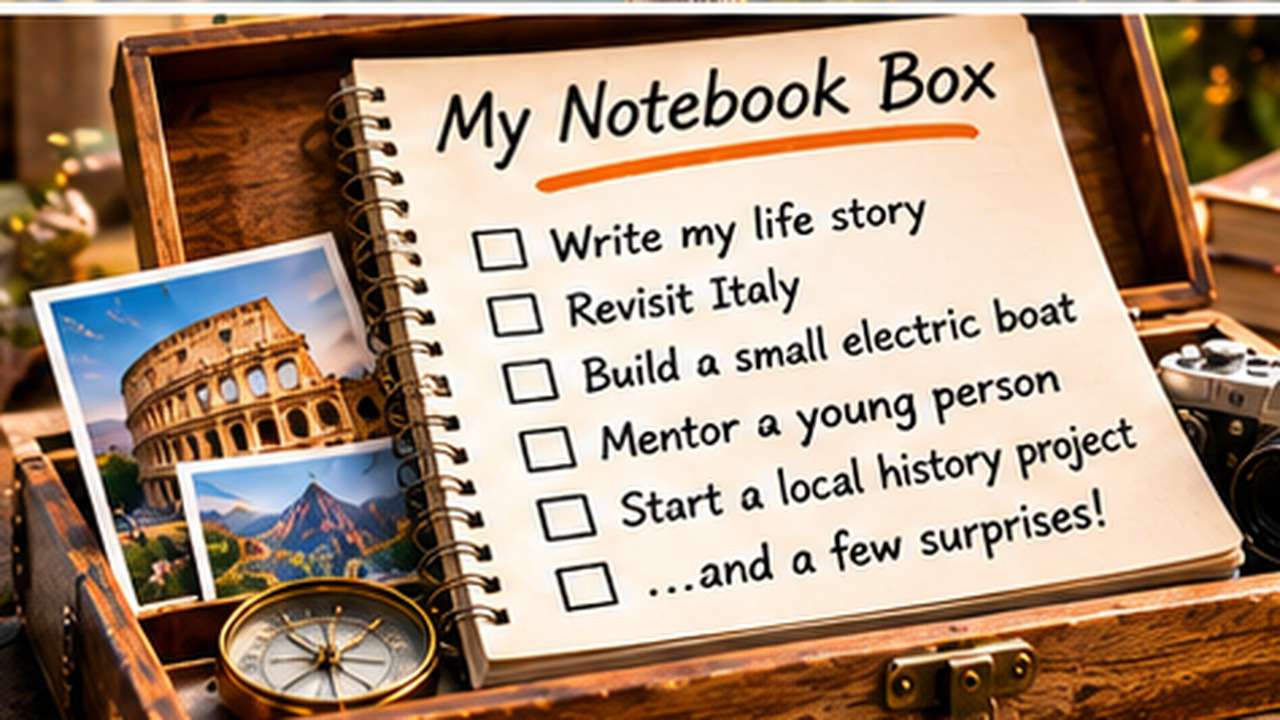
Children have toy boxes. Older people deserve a Notebook Box: a repository of non-urgent projects, unmade plans, unfinished conversations and ideas that may or may not happen.
A note might say 'Build a small electric boat', 'Record the family recipes', 'Investigate the history of our town' or 'Find out what happened at that Christmas party in 1987'. Unlike a bucket list, it carries no expiry date, performance appraisal or obligation to tick everything off.
A retirement community could help residents make and revisit their boxes, invite friends to collaborate and create time for intriguing experiments. The point is not productivity. It's keeping possibility alive.
The Thursday Murder Club: now that's my kind of retirement
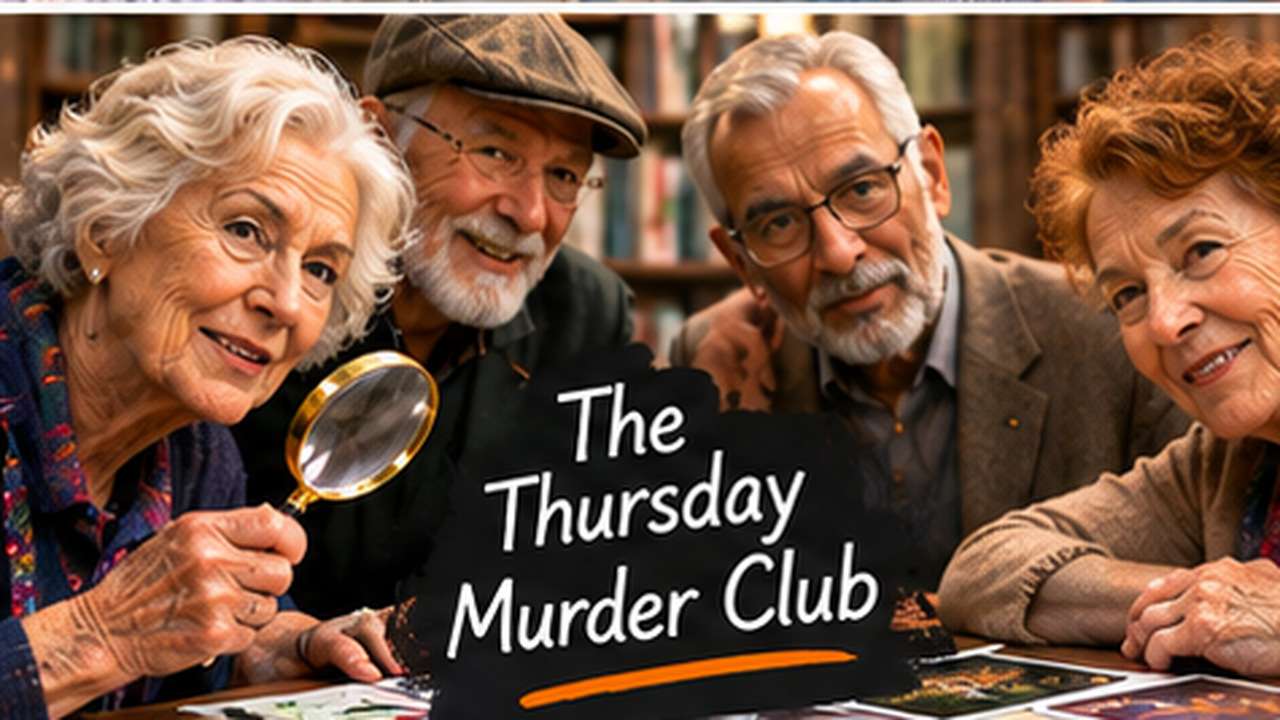
At Coopers Chase, the fictional retirement community in Richard Osman's The Thursday Murder Club, Elizabeth, Ron, Ibrahim and Joyce investigate murders. Not because management has created an ambitious Thursday programme, but because they are curious, capable people with friendships and purposes of their own.
They're not waiting to die. They're busy trying to work out who killed someone else. Of course, a fictional luxury retirement village is not the same as a high-care residential facility. Still, its philosophy is irresistible: being entertained is not the same as being needed.
Perhaps Monday is local history, Tuesday is digital espionage (discovering what grandchildren post online), Wednesday is an obituary-writing comedy workshop, Thursday is the murder club, Friday is adventure planning and Sunday is an opportunity to explain why nobody visited since Christmas.
Introducing #LivingWakeAdventures — The Last Hoorah
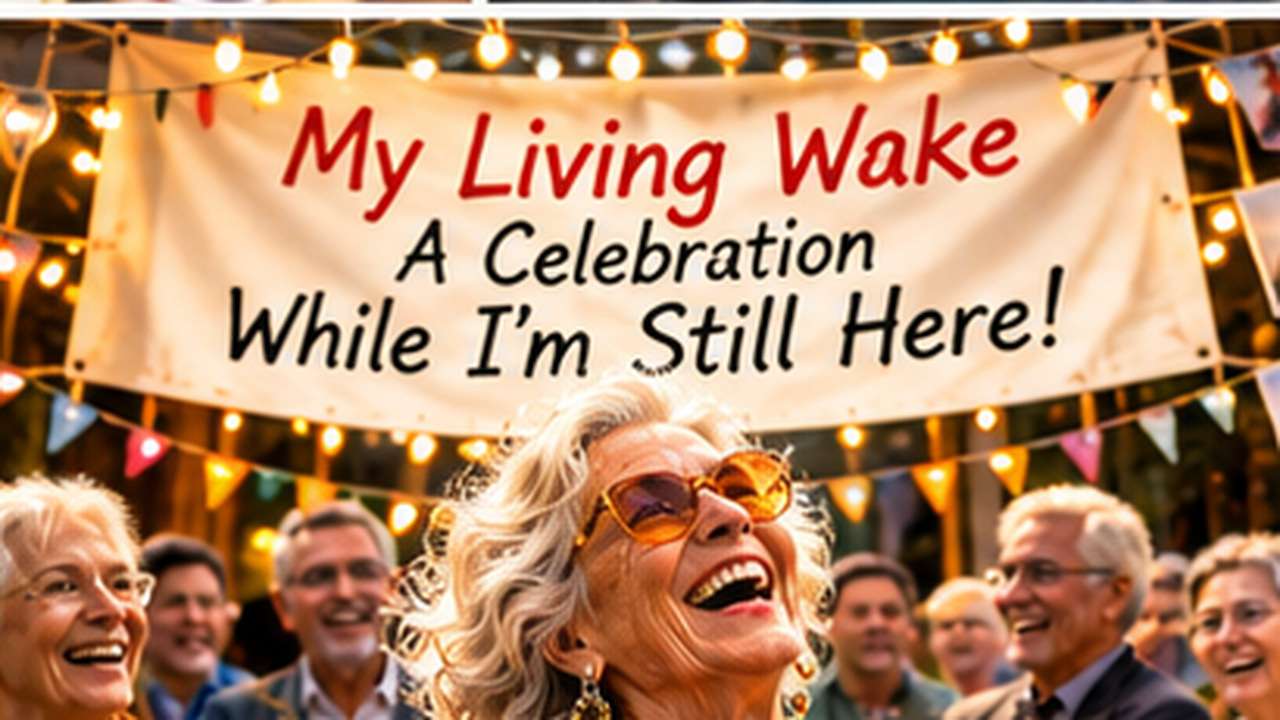
Because the best person to attend your celebration of life is you. Imagine a social venture that helps older Australians choose an adventure, celebrate relationships, preserve stories and create something meaningful while they can enjoy the result.
Part adventure company, part legacy studio, part intergenerational storytelling initiative — and possibly a logistical nightmare for the retirement village. Host a living wake with friends, former colleagues and old flames (subject to spousal approval). Let the guest of honour laugh, cry, correct historical inaccuracies and finally hear the kind words usually saved for a funeral.
More importantly, begin with their why. The last hoorah is not necessarily one extravagant last event; it could be a series of small, meaningful acts chosen by the person themselves.
The Last Hoorah Index: a new aged care selection criterion?

Facilities are usually compared on accommodation, safety, care quality, meals and proximity to family. All essential. But perhaps Baby Boomers will also ask which place best helps residents continue to be themselves. Imagine the Last Hoorah Index:
| Experience | What makes it memorable |
|---|---|
| The 18th hole | A personalised final round and clubhouse celebration. |
| Bespoke bingo | Life's milestones, misadventures and carefully curated family secrets. |
| The Notebook Box | Non-urgent possibilities, no completion deadline. |
| Co-designed plaque | Words selected and revised by the person themselves. |
| Virtual messages | Consensual family greetings and stories with a sustainable storage plan. |
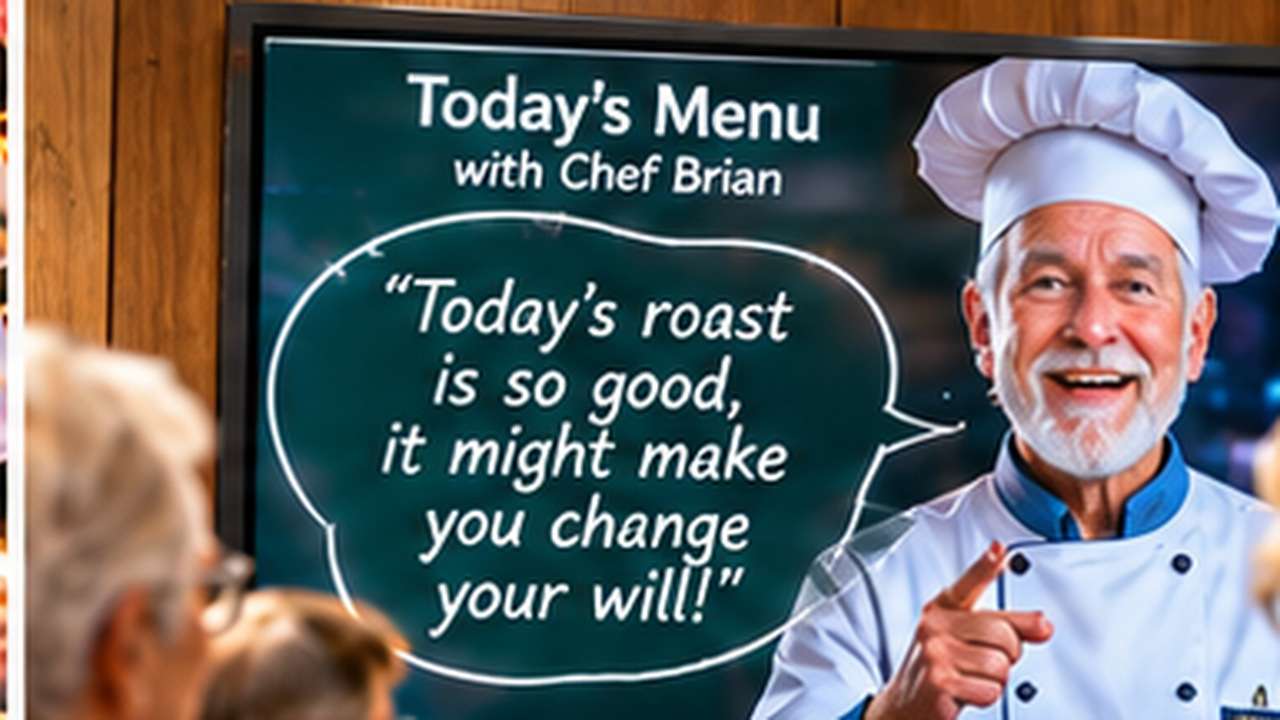
| The chef avatar | A retired chef introduces the menu and critiques the gravy. |
| The tradie's lift | A new recorded joke each floor, ideally with an off switch. |
| Life-story backup | Digitise stories before Grandpa's Nokia becomes the only archive. |
| The living wake | A tribute that the guest of honour can attend. |
| The holodeck | Immersive adventures without the long-haul flights. |
Captain Picard's holodeck, with a two-year waiting list

Sir Patrick Stewart, whose Captain Jean-Luc Picard inspired generations of Star Trek viewers, died on 28 October 2026 aged 86 (Reuters, 2026). His fictional holodeck offers an amusingly serious thought experiment for ageing.
Imagine a half-tennis-court-sized immersive room in every retirement village: revisit a childhood street, walk virtually through Paris, fly above the reef or return to the 18th hole at St Andrews. VR and projection cannot recreate science fiction, and accessibility must guide design, but immersive experiences can widen horizons when mobility changes.
Naturally, bookings would be available hourly. Unfortunately, owing to Commonwealth funding constraints and demand, reservations must be made two years in advance. By which point some residents may prefer a simulation of the afterlife.
Robin Williams and The Final Cut: who owns our story?
In the 2004 film The Final Cut, Robin Williams plays an editor who assembles people's recorded lives into memorial films after their deaths. It raises an unsettling question: who chooses which memories survive?
AI can now help organise photographs, transcripts and oral histories. We might preserve a retired chef's favourite recipes, a teacher's stories or a tradie's terrible lift jokes. But a conversational avatar must be opt-in, labelled as synthetic and prevented from inventing beliefs its source never expressed.
Not every family secret needs a cloud subscription. The right to be forgotten matters as much as the right to be remembered.
The great Baby Boomer wealth redistribution
Imagine a Crypt-IPO: an Initial Passing Offering, where older people voluntarily help finance community projects they can still enjoy watching succeed. 'Past performance is no guarantee of future longevity.' 'High emotional returns; limited investment horizon.'
Behind the joke is a serious proposition: funding an apprentice, community garden, scholarship, playground or social enterprise during one's lifetime can create meaning for both giver and recipient. Any real model would need strong safeguards against coercion and financial exploitation. Autonomy includes the right not to participate.
Choice is about more than dying
Voluntary assisted dying is governed by tightly defined eligibility criteria and safeguards. It is not a general option to choose when to die, or a substitute for palliative care, disability support and compassionate services.
The broader question is whether we respect people's choices when they are living: where to be, whom to see, what to learn, how to contribute and which memories to preserve. Requiring care should not mean surrendering personality. Purpose must never become another compulsory activity or a measure of someone's human worth.
Let's treat the Notebook Box and Last Hoorah as invitations, not obligations. Some people will want grand adventures; others will choose quiet companionship, gardening or an afternoon uninterrupted by the activities coordinator.
Perhaps the last hoorah should come first
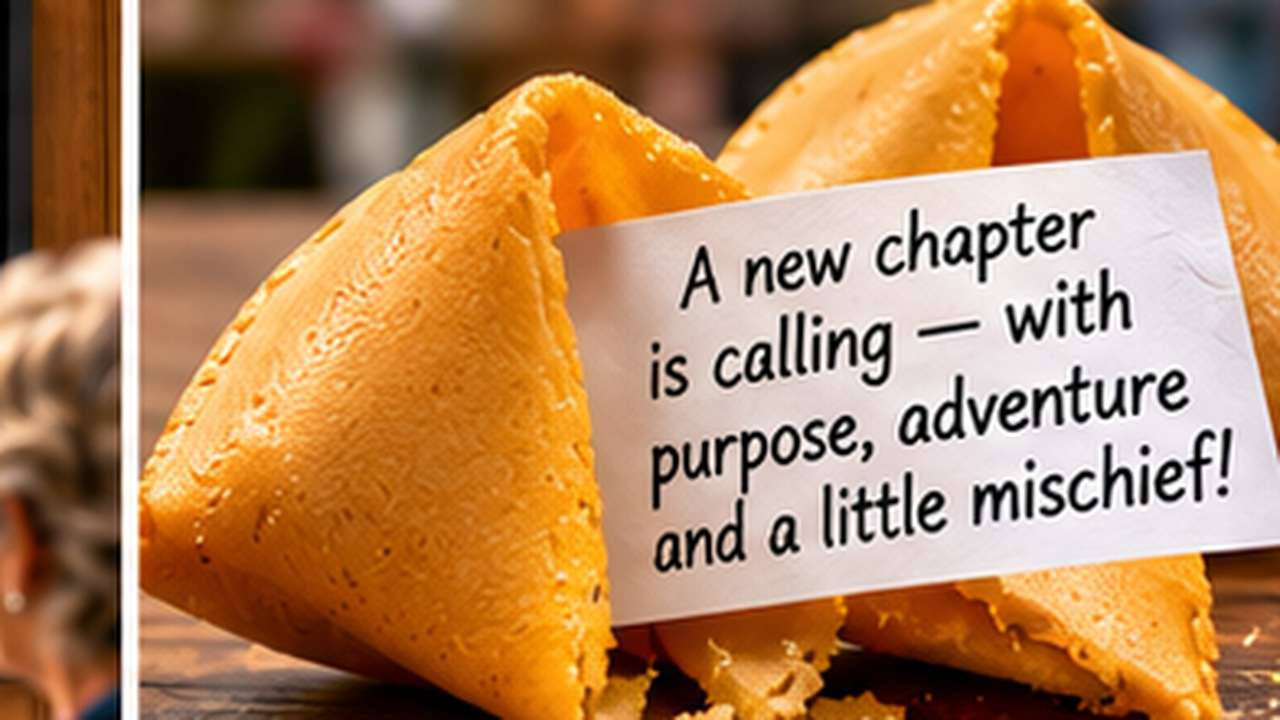
Perhaps we should borrow a lesson from social enterprise: Find your why. Then work out how to fund it. Celebrate a life while its owner can join in; preserve stories together; make choices while they are still yours.
Don't let somebody else write your final chapter while you're perfectly capable of adding a few more pages. Preferably funny ones.
And if somebody is arranging my retirement accommodation, I would like Coopers Chase, a Notebook Box, a holodeck and an 18th hole. Although, given the waiting lists, I should probably book before I'm eligible.
What belongs in your Notebook Box — and what is one thing you would like to do while you can still enjoy it?
If you could choose one last adventure, living wake or lasting legacy, what would it be?
Is it time to decide what belongs in your Notebook Box?
References and further reading
- ABC News (2026), one year of VAD in the ACT
- Australian Institute of Health and Welfare (2026), Australia's Health
- AIHW GEN (2026), Spending on aged care
- My Aged Care (2026), Support at Home waiting lists
- World Health Organization, Healthy ageing and functional ability
- Sutin et al. (2026), purpose in life and mortality
- Reuters (2026), Sir Patrick Stewart obituary
- Social Enterprise Sherpa
LivingWakeAdventures, the Notebook Box, the Last Hoorah Index and Crypt-IPO are proposed concepts. The article is an opinion piece, not financial, medical or legal advice.