

From Canoes to Carbon-Neutral Engines
 When we reflect on humanity’s greatest leaps, it is tempting to think only of the industrial age, the space race, or the digital revolution. But perhaps the most courageous pioneers were those who, over 50,000 years ago, first made the perilous sea crossing to what we now call Australia. Without modern maps, engines, or satellites, Indigenous Australians’ ancestors likely travelled in simple canoes from Asia, guided by little more than the stars and an insatiable human drive: curiosity.
This same spirit continues today. Last week, Toyota’s announcement of a radical new high-power, hybrid-optimised, carbon-neutral engine offered not just a glimpse into the future of cars — but a moment to reflect on the nature of progress itself (Toyota, 2024). While the world watches electric vehicles (EVs) surge ahead, Toyota’s move suggests another possibility: a future where internal combustion evolves, rather than vanishes.
This begs the question: where is transport really heading?
How Toyota’s New Engine Shifts the Landscape
Toyota’s newly announced 2.0-litre turbocharged hybrid-ready engine is a remarkable piece of engineering: 400 horsepower from a compact, lightweight form, designed for integration with electric motors and carbon-neutral fuels. It’s not a farewell to petrol; it’s an evolution towards hybrid performance and sustainable mobility.
The move bucks the trend of EV absolutism, offering a “multi-pathway” approach: hybrids, hydrogen, battery EVs, and cleaner combustion co-existing rather than competing.
To illustrate the potential shifts, here’s a table summarising how Toyota’s engine compares with typical EV strategies:
| Aspect | Toyota’s New Engine (Hybrid Turbo) | Typical EV (Battery Electric Vehicle) |
|---|---|---|
| Carbon Emissions | Low (with hybrid system and/or carbon-neutral fuels) | Zero tailpipe emissions (but manufacturing emissions remain) |
| Performance | Very high (400 hp from 2.0 L + hybrid boost) | Instant torque; linear acceleration |
| Refuelling/Recharging | Quick (petrol station) + Potential carbon-neutral fuel | Longer charging times; improving fast-charging networks |
| Driving Experience | Traditional sound, feel, manual gearbox possible | Smooth, quiet, instant acceleration |
| Infrastructure Needs | Existing (petrol stations, hybrid servicing) | Needs widespread charging networks |
| Cost of Ownership | Moderate (hybrids usually lower running costs than pure petrol) | Low (lower maintenance, cheaper ‘fuel’ costs) |
| Environmental Risk | Relies on availability of clean fuels; still produces some emissions | Battery production impact (mining, recycling) |
| Market Flexibility | Strong (hybrid appeal in regions with weak EV infrastructure) | Stronger in urban centres with mature EV support |
| Innovation Risk | Medium (hybrids still face stricter future regulations) | Medium-high (betting fully on battery tech evolution) |
| Strategic Bet | Multi-pathway (hybrids + ICE + EVs) | Full EV commitment (no fallback on ICE) |
Toyota unveils next-generation engines for a multi-pathway strategy which reminds us: the future is never one path only.
Why Curiosity Will Shape the Next Frontier of Transport
The ancestors who dared cross to Australia thousands of years ago were not guaranteed success.
They risked everything for the possibility of discovery.
Similarly today, the future of transport won’t be determined solely by rigid projections of EV adoption curves.
It will hinge on curious minds willing to:
- Question orthodoxy (“Are battery EVs the only sustainable future?”)
- Test alternatives (“Could hydrogen, synthetic fuels, autonomous drones reshape mobility?”)
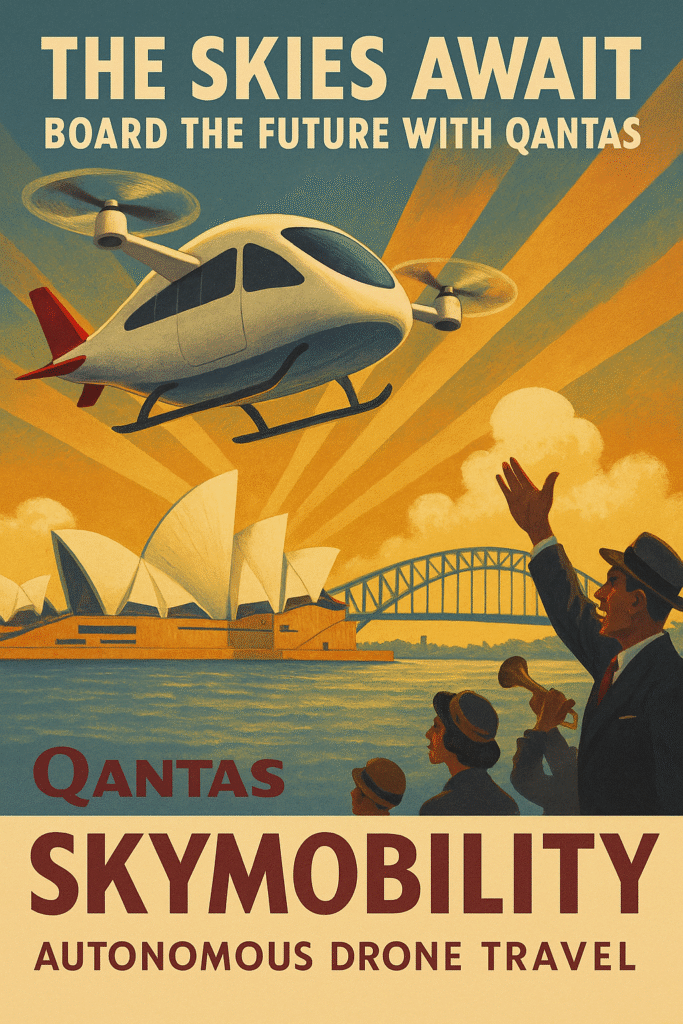
- Imagine new solutions (“Could airlines like Qantas operate eVTOLs for rooftop-to-airport travel?”)
- Integrate the past and the future (“Could hybrids and clean fuels bridge us to full electrification?”)
How is your curiosity travelling?
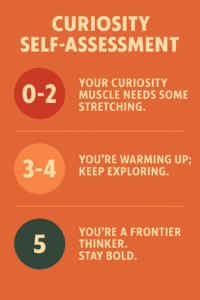
Take a moment to assess your curiosity – Try this short self-assessment:
- When faced with a new topic, do you feel more excitement or overwhelm?
- How often do you ask “what if?” questions in your daily life?
- Do you actively seek out views that challenge your assumptions?
- When solving problems, do you explore unconventional options?
- Have you explored a topic recently just for the joy of learning?
Score 1 point for each ‘yes’.
Tips to Strengthen Your Curiosity Muscle
- Read outside your field: Borrow ideas from science, art, history.
- Ask better questions: Go beyond “what is” to “why”, “how”, and “what if”.
- Change your routine: Novelty triggers curiosity. Take a new route. Eat differently. Learn a new tool.
- Be comfortable with not knowing: Embrace the gap between what you know and what you’re learning.
- Talk to strangers: Listen to people who live outside your bubble. Their stories may surprise you.